2016年1月12日 星期二

2016年1月6日 星期三
Western Literature Week 17
John
Milton

John
Milton was an English poet, polemicist, man of letters, and a civil servant for
the Commonwealth of England under Oliver Cromwell. He wrote at a time of
religious flux and political upheaval, and is best known for his epic poem
Paradise Lost (1667), written in blank verse.
Milton's
poetry and prose reflect deep personal convictions, a passion for freedom and
self-determination, and the urgent issues and political turbulence of his day.
Writing in English, Latin, Greek, and Italian, he achieved international renown
within his lifetime, and his celebrated Areopagitica (1644)—written in
condemnation of pre-publication censorship—is among history's most influential
and impassioned defences of free speech and freedom of the press.
Samson Agonistes →
Powerlessness

It is
a tragic closet drama by John Milton
Delilah
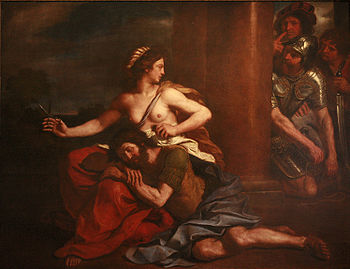
Delilah
is a character in the Hebrew bible Book of Judges, where she is the "woman
in the valley of Sorek" whom Samson loved, and who was his downfall. Her
figure, one of several dangerous temptresses in the Hebrew Bible, has become
emblematic: "Samson loved Delilah, she betrayed him, and, what is worse,
she did it for money," Madlyn Kahr begins her study of the Delilah motif
in European painting.
The story of Samson
in Judges 13–16 portrays a man who was given great strength by God but who
ultimately loses his strength when Delilah allows the Philistines to shave his
hair during his slumber (Judges 16:19). Samson was born into an Israelite
family, the son of Manoah and his wife who is never named. Both are visited by
the Angel of the Lord and told that their child will be a Nazirite from birth.
A Lock
of hair

A lock of hair is a
piece or pieces of hair that has been cut from, or remains singly on, a human
head, most commonly bunched or tied together in some way. A standard dictionary
definition defines a lock as a tress, curl, or ringlet of hair.
Goldilocks
Goldilocks
and the Three Bears
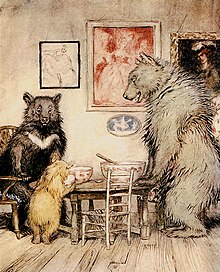
"Goldilocks
and the Three Bears" and the older "The Story of the Three
Bears" are two variations of an old fairy tale. The original tale tells of
an ugly, old woman who enters the forest home of three bachelor bears whilst
they are away. She sits in their chairs, eats some of their porridge, and falls
asleep in one of their beds. When the bears return and discover her, she starts
up, jumps from the window, and is never seen again. The other major version
brings Goldilocks to the tale (replacing the old woman), and an even later
version retained Goldilocks, but has the three bachelor bears transformed into
Papa, Mama, and Baby Bear.
What
was originally a fearsome oral tale became a cosy family story with only a hint
of menace. The story has elicited various interpretations and has been adapted
to film, opera, and other media. "The Story of the Three Bears" is
one of the most popular fairy tales in the English language.
Lucifer = Satan = Prince of Darkness

Dante
Alighieri
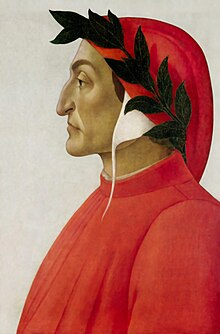
Durante
degli Alighieri, was a major Italian poet of the late Middle Ages. His Divine
Comedy, originally called Comedìa (modern Italian: Commedia) and later christened
Divina by Boccaccio, is widely considered the greatest literary work composed
in the Italian language and a masterpiece of world literature.
Divine
Comedy
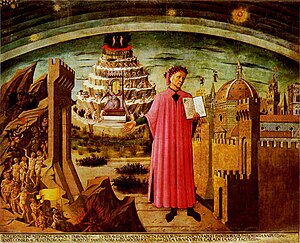
The
Divine Comedy is an epic poem by Dante Alighieri, begun c. 1308 and completed
1320, a year before his death in 1321. It is widely considered the preeminent
work of Italian literature and is seen as one of the greatest works of world
literature. The poem's imaginative vision of the afterlife is representative of
the medieval world-view as it had developed in the Western Church by the 14th
century. It helped establish the Tuscan language, in which it is written, as
the standardized Italian language. It is
divided into three parts:
- Inferno
- Purgatorio
- Paradiso
On
the surface, the poem describes Dantes travels through Hell, Purgatory, and
Paradise or Heaven; but at a deeper level, it represents, allegorically, the
soul's journey towards God. At this deeper level, Dante draws on medieval
Christian theology and philosophy, especially Thomistic philosophy and the
Summa Theologica of Thomas Aquinas. Consequently, the Divine Comedy has been
called "the Summa in verse".
Nine
circles of Hell
First
Circle (Limbo)
Second
Circle (Lust)
Third
Circle (Gluttony)
Fourth
Circle (Greed)
Fifth
Circle (Anger)
Sixth
Circle (Heresy)
Seventh
Circle (Violence)
Eighth
Circle (Fraud)
Ninth
Circle (Treachery)
Seven
Deadly Sins

The
seven deadly sins, also known as the capital vices or cardinal sins, is a
Western religious grouping and classification of vices. According to the Catechism of the Catholic Church, a mortal or
deadly sin is believed to destroy the life of grace and charity within a
person.
Pride,
Greed, Lust, Envy, Gluttony, Wrath and Sloth.
Dan Brown “Infferno”

The
Canterbury Tales
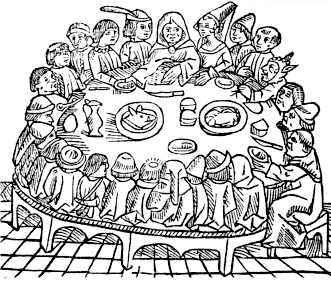
The
Canterbury Tales is a collection of 24 stories that runs to over 17,000 lines
written in Middle English by Geoffrey Chaucer. In 1386 Chaucer became
Controller of Customs and Justice of Peace and then three years later in 1389
Clerk of the King's work. It was during these years that Chaucer began working
on his most famous text, The Canterbury Tales. The tales (mostly written in
verse, although some are in prose) are presented as part of a story-telling
contest by a group of pilgrims as they travel together on a journey from London
to Canterbury in order to visit the shrine of Saint Thomas Becket at Canterbury
Cathedral. The prize for this contest is a free meal at the Tabard Inn at
Southwark on their return.
Mose
Receives the Law
Prince
of Egypt

訂閱:
文章 (Atom)