Ode on a Grecian Urn

"Ode on a Grecian Urn" is a poem
written by the English Romantic poet John Keats in May 1819 and published
anonymously in the January 1820, Number 15 issue of the magazine Annals of the
Fine Arts (see 1820 in poetry).
Divided into five stanzas of ten lines
each, the ode contains a narrator's discourse on a series of designs on a
Grecian urn. The poem focuses on two scenes: one in which a lover eternally
pursues a beloved without fulfilment, and another of villagers about to perform
a sacrifice. The final lines of the poem declare that "'beauty is truth,
truth beauty,' – that is all / Ye know on earth, and all ye need to know",
and literary critics have debated whether they increase or diminish the overall
beauty of the poem. Critics have focused on other aspects of the poem,
including the role of the narrator, the inspirational qualities of real-world
objects, and the paradoxical relationship between the poem's world and reality.
John Keats
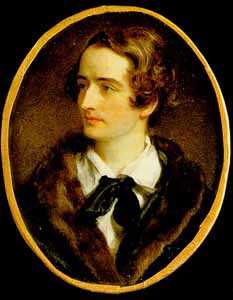
John Keats (31 October 1795 – 23 February
1821) was an English Romantic poet. He was one of the main figures of the
second generation of Romantic poets, along with Lord Byron and Percy Bysshe
Shelley, despite his work having been in publication for only four years before
his death.
Although his poems were not generally well
received by critics during his lifetime, his reputation grew after his death,
and by the end of the 19th century, he had become one of the most beloved of
all English poets. He had a significant influence on a diverse range of poets
and writers. Jorge Luis Borges stated that his first encounter with Keats was
the most significant literary experience of his life.
Catharsis
Catharsis (from Greek meaning "purification" or
"cleansing") is the purification and purgation of emotions—especially
pity and fear—through art or any extreme change in emotion that results in
renewal and restoration. It is a metaphor originally used by Aristotle in the
Poetics, comparing the effects of tragedy on the mind of spectator to the
effect of a cathartic on the body.
Allegory
As a literary device, an allegory in its
most general sense is an extended metaphor. Allegory has been used widely
throughout history in all forms of art, largely because it can readily
illustrate complex ideas and concepts in ways that are comprehensible or
striking to its viewers, readers, or listeners.
Writers or speakers typically use
allegories as literary devices or as rhetorical devices that convey hidden
meanings through symbolic figures, actions, imagery, and/or events, which
together create the moral, spiritual, or political meaning the author wishes to
convey.
One of the best-known examples of allegory,
Plato's Allegory of the Cave, forms a part of his larger work The Republic.
Aesop's fable

A collection of fables credited to Aesop, a
slave and storyteller believed to have lived in ancient Greece between 620 and
560 BC. Of diverse origins, the stories associated with Aesop's name have
descended to modern times through a number of sources. They continue to be
reinterpreted in different verbal registers and in popular as well as artistic
media.
In Classical times there were various
theorists who tried to differentiate these fables from other kinds of
narration. They had to be short and unaffected; in addition, they are
fictitious, useful to life and true to nature. In them could be found talking
animals and plants, although humans interacting only with humans figure in a
few. Typically they might begin with a contextual introduction, followed by the
story, often with the moral underlined at the end. Setting the context was
often necessary as a guide to the story's interpretation, as in the case of the
political meaning of The Frogs Who Desired a King and The Frogs and the Sun.
Parable
A parable is a succinct, didactic story, in
prose or verse, which illustrates one or more instructive lessons or
principles. It differs from a fable in that fables employ animals, plants,
inanimate objects, or forces of nature as characters, whereas parables have
human characters. A parable is a type of analogy.
Some scholars of the canonical gospels and
the New Testament apply the term "parable" only to the parables of
Jesus, though that is not a common
restriction of the term. Parables such as "The Prodigal Son" are
central to Jesus' teaching method in the canonical narratives and the
apocrypha.
Foreshadowing
A literary device by which an author hints
what is to come. It is used to avoid disappointment. It is also sometimes used
to arouse the reader.A hint that is designed to mislead the audience is
referred to as a red herring. A similar device is the flashforward (also known
as prolepsis). However, foreshadowing only hints at a possible outcome within
the confinement of a narrative. A flashforward is a scene that takes the
narrative forward in time from the current point of the story in literature,
film, television, and other media. Foreshadowing is sometimes employed through
characters explicitly predicting the future.By analogy to foreshadowing, the literary
critic Gary Morson described its opposite, sideshadowing.
Falshback
A flashback is an interjected scene that
takes the narrative back in time from the current point in the story.
Flashbacks are often used to recount events that happened before the story's
primary sequence of events to fill in crucial backstory. In the opposite
direction, a flashforward (or prolepsis) reveals events that will occur in the
future.Both flashback and flashforward are used to cohere a story, develop a
character, or add structure to the narrative. In literature, internal analepsis
is a flashback to an earlier point in the narrative; external analepsis is a
flashback to a time before the narrative started.
In movies and television, several camera
techniques and special effects have evolved to alert the viewer that the action
shown is a flashback or flashforward; for example, the edges of the picture may
be deliberately blurred, photography may be jarring or choppy, or unusual
coloration or sepia tone, or monochrome when most of the story is in full
color, may be used.
Prefix/Root/Suffix
ver-/vir---> true
verism (n.) the theory that rigid
representation of truth and reality is essential to art and literature, and
therefore the ugly and vulgar must be included
virtual (a.) having the essence or effect
but not the appearance or form of
pro---> in favor of
protagonist (n.) the leading character,
hero, or heroine of a drama or other literary work
anti---> against
antinomy (n.) opposition between one law,
principle, rule
antihero (n.) a central character in a
novel, play, etc, who lacks the traditional heroic virtues
hypo---> under
hypothesis (n.) a proposition assumed as a
premise in an argument
-dic---> to say, to tell
verdict (v.) a judgment; decision
predict (v.) to declare or tell in advance; prophesy; foretell

沒有留言:
張貼留言