Epic
poetry

An
epic poem, epic is a lengthy narrative poem, ordinarily concerning a serious
subject containing details of heroic deeds and events significant to a culture
or nation. Milman Parry and Albert Lord have argued that the Homeric epics, the
earliest works of Western literature, were fundamentally an oral poetic form.
These works form the basis of the epic genre in Western literature. Nearly all
Western epic self-consciously presents itself as a continuation of the
tradition begun by these poems. Classical epic employs dactylic hexameter and
recounts a journey, either physical (as typified by Odysseus in the Odyssey) or
mental (as typified by Achilles in the Iliad) or both. Epics also tend to
highlight cultural norms and to define or call into question cultural values,
particularly as they pertain to heroism.
Another
type of epic poetry is epyllion, which is a brief narrative poem with a
romantic or mythological theme. The term, which means "little epic",
came into use in the nineteenth century. It refers primarily to the erudite,
shorter hexameter poems of the Hellenistic period and the similar works
composed at Rome from the age of the neoterics; to a lesser degree, the term
includes some poems of the English Renaissance, particularly those influenced
by Ovid. The most famous example of classical epyllion is perhaps Catullus 64.
The
Iliad

The
Iliad in Classical Attic; sometimes referred to as the Song of Ilion or Song of
Ilium, is an ancient Greek epic poem in dactylic hexameter, traditionally
attributed to Homer. Set during the Trojan War, the ten-year siege of the city
of Troy by a coalition of Greek states, it tells of the battles and events
during the weeks of a quarrel between King Agamemnon and the warrior Achilles.
Although
the story covers only a few weeks in the final year of the war, the Iliad
mentions or alludes to many of the Greek legends about the siege; the earlier
events, such as the gathering of warriors for the siege, the cause of the war,
and related concerns tend to appear near the beginning. Then the epic narrative
takes up events prophesied for the future, such as Achilles' looming death and
the sack of Troy, prefigured and alluded to more and more vividly, so that when
it reaches an end, the poem has told a more or less complete tale of the Trojan
War.
The
Iliad is paired with something of a sequel, the Odyssey, also attributed to
Homer. Along with the Odyssey, the Iliad is among the oldest extant works of
Western literature, and its written version is usually dated to around the
eighth century BC. Recent statistical modelling based on language evolution
gives a date of 760–710 BC. It is written in Homeric Greek, a literary amalgam
of Ionic Greek and other dialects.

Achilles Lamenting the Death of Patroclus

Achilles Slays Hector
The
Trojan War

The
Trojan War was waged against the city of Troy by the Achaeans (Greeks) after
Paris of Troy took Helen from her husband Menelaus, king of Sparta. The war is
one of the most important events in Greek mythology and has been narrated
through many works of Greek literature, most notably through Homer's Iliad. The
Iliad relates a part of the last year of the siege of Troy; the Odyssey
describes the journey home of Odysseus, one of the war's heroes. Other parts of
the war are described in a cycle of epic poems, which have survived through
fragments. Episodes from the war provided material for Greek tragedy and other
works of Greek literature, and for Roman poets including Virgil and Ovid.
Odysseus
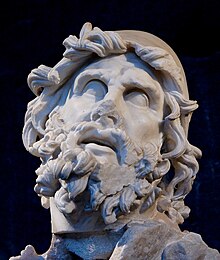
Odysseus
was a legendary Greek king of Ithaca and the hero of Homer's epic poem the
Odyssey. Odysseus also plays a key role in Homer's Iliad and other works in
that same epic cycle.
Husband
of Penelope, father of Telemachus, and son of Laërtes and Anticlea, Odysseus is
renowned for his brilliance, guile, and versatility (polytropos), and is hence
known by the epithet Odysseus the Cunning (cunning intelligence). He is most famous
for the ten eventful years he took to return home after the decade-long Trojan
War.
Xanthus

Xanthus
also known as Scamander, is the river god.
Scamander
fought on the side of the Trojans during the Trojan War, after the Greek hero
Achilles insulted him. Scamander was also said to have attempted to kill
Achilles three times, and the hero was only saved due to the intervention of
Hera, Athena and Hephaestus. In this context, he is the personification of the
Scamander River that flowed from Mount Ida across the plain beneath the city of
Troy, joining the Hellespont north of the city. The Achaeans, according to
Homer, had set up their camp near its mouth, and their battles with the Trojans
were fought on the plain of Scamander. Homer states that the river had two
springs: one produced warm water; the other yielded cold water, regardless of
the season.
The Great Gatsby

- I am still a little afraid of missing something if I forget that, as my father snobbishly suggested, and I snobbishly repeat a sense of the fundamental decencies is parcelled out unequally at birth.
- If personality is an unbroken series of successful gestures, then there was something gorgeous about him, some heightened sensitivity to the promises of life, as if he were related to one of those intricate machines that register earthquakes ten thousand miles away.
A
History of the Months
January
-- Janus's month
February
-- month of Februa
March
-- Mars' month
April
-- Aphrodite's month
May
-- Maia's month
June
-- Juno's month
July
-- Julius Caesar's month
August
-- Augustus Caesar's month
September
-- the seventh month
October
-- the eighth month
November
-- the ninth month
December
-- the tenth month

沒有留言:
張貼留言