Aristophanes

Aristophanes
was a comic playwright of ancient Athens. Eleven of his thirty plays survive
virtually complete. These, together with fragments of some of his other plays,
provide the only real examples of a genre of comic drama known as Old Comedy,
and they are used to define the genre.
Also
known as the Father of Comedy and the Prince of Ancient Comedy, Aristophanes
has been said to recreate the life of ancient Athens more convincingly than any
other author. His powers of ridicule were feared and acknowledged by
influential contemporaries; Plato singled out Aristophanes' play The Clouds as
slander that contributed to the trial and subsequent condemning to death of
Socrates although other satirical playwrights had also caricatured the
philosopher.
Lysistrata
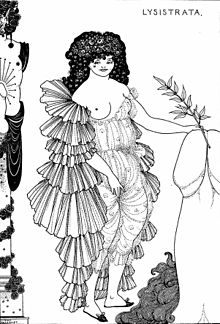
Lysistrata
is a comedy by Aristophanes. Originally performed in classical Athens in 411
BC, it is a comic account of one woman's extraordinary mission to end the
Peloponnesian War. Lysistrata persuades the women of Greece to withhold sexual
privileges from their husbands and lovers as a means of forcing the men to
negotiate peace—a strategy, however, that inflames the battle between the
sexes. The play is notable for being an early expose of sexual relations in a
male-dominated society(citation needed). Additionally, its dramatic structure
represents a shift from the conventions of Old Comedy, a trend typical of the
author's career. It was produced in the same year as the Thesmophoriazusae,
another play with a focus on gender-based issues, just two years after Athens'
catastrophic defeat in the Sicilian Expedition.
Hubris: Pride/Arrogance
Faust
Chorus: Ideal spectator/Audience
Purple robes
Blue blood: Noble
birth

沒有留言:
張貼留言